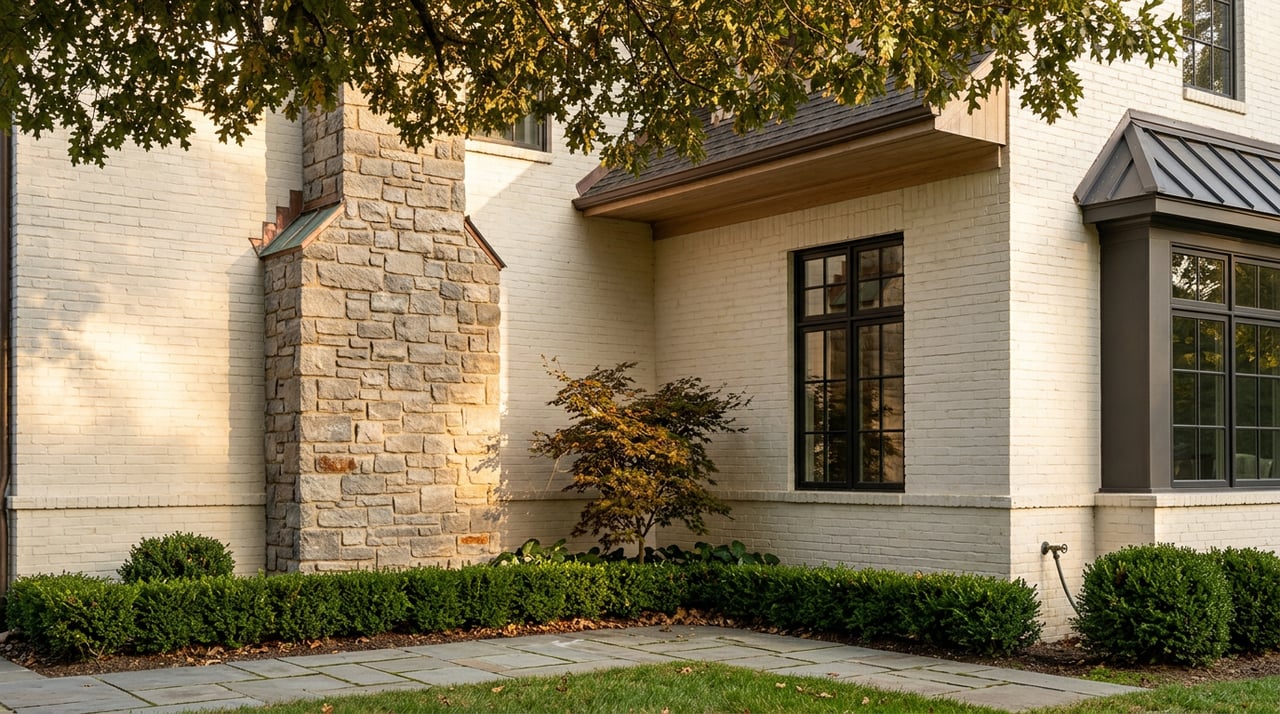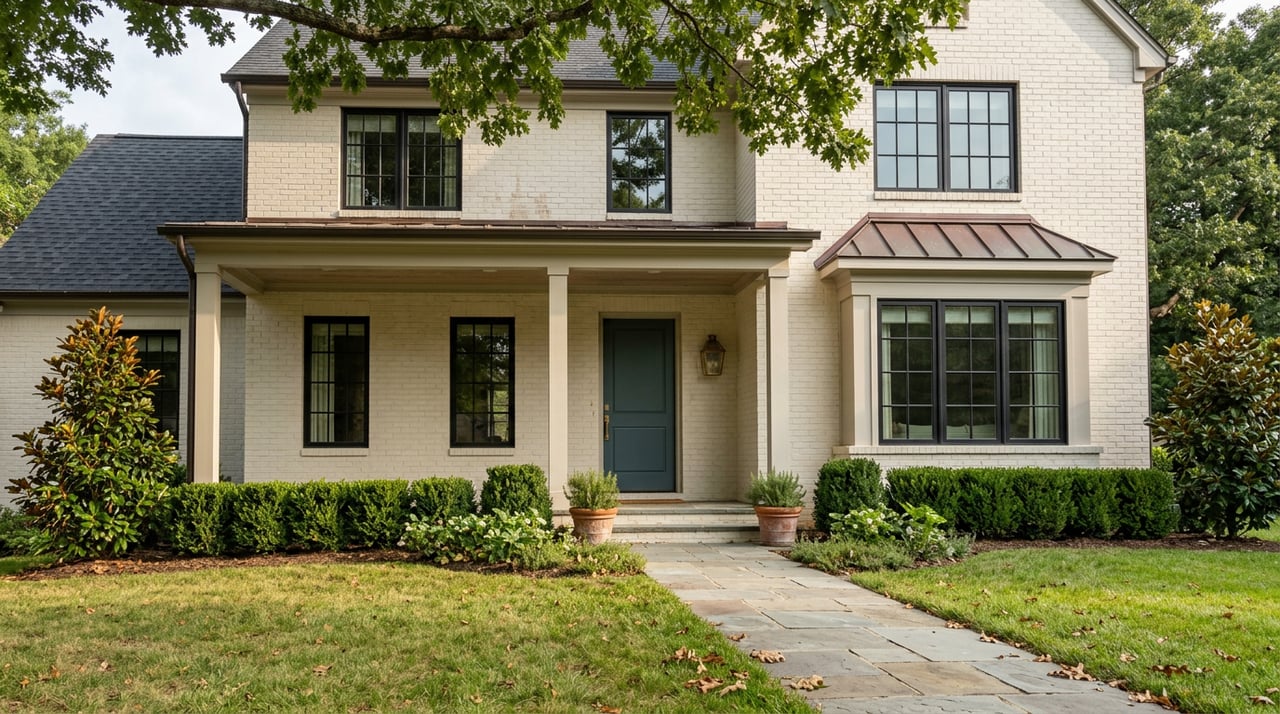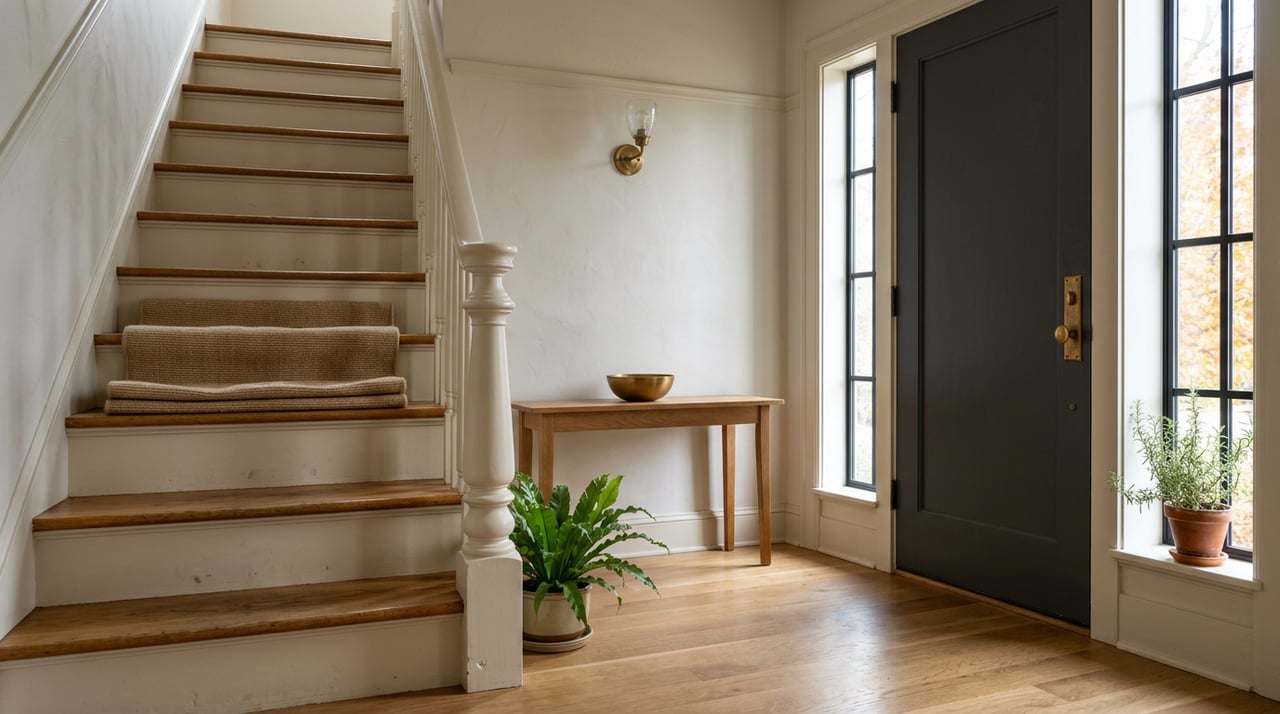
Who is the real buyer for a 1940s bungalow on a deep Inside the Beltline lot in 2026? Depending on how the listing is prepared, it is one of two people, and they are willing to pay very different prices. One is a family that wants a restored ITB home and will pay a renovated-comp premium. The other is a builder who plans to scrape the house and either put up a $1M single-family or split the lot into two townhome doors. The gap between those two offers is often six figures.
Most sellers assume the market decides which buyer shows up. It does not. The seller decides, in four specific places, well before the first showing.
The competition for your older ITB home is not the renovated house two streets over. It is the teardown value of your lot. Your preparation choices determine which of those numbers a buyer starts from.
The lot-value floor is now a real number, not a hypothetical
Raleigh recorded 252 residential demolitions in 2025, up from 124 in 2024 and 105 in 2023. The economics behind that jump are not subtle. Raleigh planning director Pat Young told the News & Observer that new single-family homes inside the Beltline often hit the market near $1 million to $1.1 million, while two-unit townhomes can sell for roughly $550,000 to $700,000. When a single lot can be turned into two front doors at those prices, it is not hard to see why developers are eager to clear older houses and start over.
This matters for a seller because it puts a hard floor under land value on most ITB blocks, and a hard ceiling on what a builder will pay for a house that stands in the way of that math. Every older home listed in Five Points, Hayes Barton, Mordecai, Cameron Park, and the surrounding streets is now priced, at least implicitly, against a builder's spreadsheet.
The rest of this piece is about the four decisions that keep your buyer from opening that spreadsheet.
Decision 1: How you answer the RPOADS
North Carolina's Residential Property Disclosure Act, G.S. 47E, requires the seller of most one-to-four unit residential property to furnish the buyer with a Residential Property and Owners' Association Disclosure Statement, along with the Mineral and Oil and Gas Rights Statement, before an offer is signed. The four-page form is given prior to an offer to purchase, and the seller has the option of answering each question "yes," "no," or "no representation." Thus, while it is a mandatory disclosure form, it does not actually mandate any disclosure because of the "no representation" option.
That third option is where sellers of older ITB homes most often hurt themselves. As of April 2026, the core N.C. Gen. Stat. 47E framework is unchanged, and recent appellate decisions have continued to hold sellers liable where known material defects were answered "No" rather than "No Representation." Courts in Wake County have heard disclosure fraud cases with damages ranging from $5,000 repair claims to six-figure lawsuits for concealed foundation failures and hidden mold.
The practical rule for a 1930s or 1940s home is narrow. If you do not know the true condition of the original galvanized supply lines, the cast-iron drain stack, the knob-and-tube remnants above the second floor, or the sill under the front porch, "No Representation" is the honest answer and the protective one. Answering "No" when you actually have partial knowledge is the answer that puts a seller in front of a Wake County judge two years later.
The overuse trap is the mirror image. Choosing "No Representation" could avoid liability for outright fraud, but overuse of this choice might raise red flags in the eye of buyers, especially if it is an element of the home about which you should really know. Smart buyers will, at a minimum, ask the home inspector they hire to look extra hard at whatever part of the home you chose to make no representations about. A form that reads "No Representation" down the entire mechanical column is the fastest way to move your buyer pool from "renovated ITB comp" toward "priced like a lot."
The correct posture is specific: answer clearly where you know, mark "No Representation" where you honestly do not, and be ready to explain why. A construction-literate walk-through of the form before it goes to a buyer usually changes several answers.
Federal law adds one more layer. For residential properties built before 1978, sellers are required to provide a Lead-Based Paint Disclosure Form to potential buyers, and the disclosure process includes a 10-day inspection period. Almost every original ITB house qualifies. The 10-day window sits inside the due diligence period and can compress your negotiation timeline if the buyer wants to use it.
Decision 2: Whether the inspection happens before or after the contract
In the peak years of 2021 to 2023, Triangle buyers were routinely offering $25,000 and higher in due diligence fees to win competitive situations. That era has passed. The 2026 market has shifted meaningfully toward buyers. You still need a credible fee to be taken seriously, but you're not competing the way buyers were three years ago in most situations and locations.
Based on closed transactions in the Raleigh market in May 2026, the average due diligence fee is running approximately $5,900, meaningfully lower than Cary at around $11,400 and Apex at around $15,300. That said, Raleigh's fees vary widely: competitive pockets like Inside the Beltline, North Hills, and Brier Creek can command fees well above the city average on a well-priced home.
Two facts, taken together, argue for a pre-listing inspection on an older ITB home.
First, the due diligence structure itself. In North Carolina, the buyer pays a non-refundable fee to the seller at contract signing and receives, in exchange, a 14 to 30 day window during which they can walk away for any reason at all. The buyer's inspector will find things. In 2026, unlike 2022, the buyer will renegotiate on those findings, and the seller is now off market during that renegotiation.
Second, the character of pre-1970 ITB housing stock. Roofs at end of life, mixed-vintage electrical, cast-iron waste lines with pinhole leaks, crawl spaces with vapor barrier gaps and old fiberglass on the joists, and settled pier foundations are the standard inventory of findings on a 1930s to 1950s Raleigh house. None of these are surprises to a general contractor. All of them read like surprises to a first-time buyer standing in a crawl space with a flashlight.
A pre-listing inspection lets the seller price the findings in, address the two or three items that visibly downgrade the buyer's read of the house, and disclose the rest cleanly on the RPOADS. It moves the negotiation out of the due diligence period and into the pricing decision, which is the seller's home turf.
Decision 3: Whether your address triggers a Certificate of Appropriateness
Any exterior change to a property within a General Historic Overlay District (HOD-G), to regulated zones within a Streetside Historic Overlay District (HOD-S), or to a Raleigh Historic Landmark, must receive a Certificate of Appropriateness (COA) prior to beginning the work, regardless of other required city permits. Local HOD examples inside the Beltline include Oakwood and Boylan Heights. As of January 2, 2026, new changes to the COA process are in effect, aligning with state law and aiming to enhance the user experience.
The reader can confirm status on their own address using the City's iMAPS layer for overlay districts.
Two things follow for a seller. If your home sits inside an HOD, a buyer's renovation math is constrained. Exterior windows, siding, front porches, roofing profile, and demolition of a contributing structure all pass through the Raleigh Historic Development Commission. An application authorizing the demolition or destruction of a building within any Historic Overlay District may not be denied, but the authorization date of such a certificate may be delayed for a period of up to 365 days. That delay is the practical shield against the teardown offer.
If your home does not sit inside a designated HOD, the shield is not there, and the block's teardown comps drive the low end of your pricing conversation whether you want them to or not.
Sellers who do not know their overlay status before listing find out the wrong way: when a builder writes an offer $150,000 below the renovated comps and cites the two lots demolished on the same street last quarter.
Decision 4: Pricing against the lot value floor, not just the closed comps
Median and average price numbers for ITB are commodity data. Based on May 2026 closed transactions, Raleigh's average sale price is approximately $571,000, higher than many buyers expect. That average is pulled upward by high-end Inside the Beltline and North Raleigh sales, while the median sits closer to $420,000 to $443,000. Those are city-wide figures. The ITB-specific number that matters to a seller of a 1940s house is the one built from two sets of comps: what renovated comparable homes on similar lots have actually closed at, and what unrenovated homes on similar lots have sold for to builders in the last twelve months.
The distance between those two numbers is the range of realistic outcomes for the property. Where the eventual sale price lands inside that range is set by the three decisions above. A clean RPOADS with defensible "No Representation" answers, a pre-listing inspection with two or three items already addressed, and clarity on HOD status will push the price toward the renovated end. Ambiguity on any of those pushes it toward the lot end.
The market context helps here. Raleigh has just barely crossed into balanced market territory for the first time since 2019. Inside the Beltline is still moving with urgency. That combination favors the prepared seller. Buyers have time to inspect and time to negotiate, but demand for well-presented ITB homes has not eroded.
A short FAQ for older ITB sellers
Does new construction on my street help or hurt my sale? Both. It confirms the lot-value floor is real, and it establishes the renovated ceiling. A prepared listing benefits from the ceiling. An unprepared one gets marked to the floor.
If I mark "No Representation" on most systems, do I still have to disclose known defects? Yes for anything you actually know. And regardless of the seller's decision to disclose issues and defects concerning the property, a broker must disclose any material facts to a prospective buyer. Silence on the form does not silence the transaction.
Is a pre-listing inspection worth the cost on a house I know has issues? On a pre-1970 ITB home in a buyer-shifted market, almost always. It converts unknown risk into a priced-in line item and moves the negotiation before the contract rather than during due diligence.
How do I find out if my property is in an HOD? The City directs owners to use iMAPS, toggling on the Raleigh Historic Overlay Districts layer.
If you own an older home Inside the Beltline and are weighing a sale in the next twelve months, the highest-value work happens before the sign goes in the yard. Jared Cozart brings twenty years of licensed general contractor experience to that preparation, along with a working read on how ITB buyers and builders are actually pricing older houses in 2026. If you would like a candid walk-through of your home, your disclosure choices, and the range your lot supports, let's connect.