A buyer who closes on a home backing the 15th fairway in Country Club Hills has bought a lot, a lawn that rolls toward manicured turf, and a mailing address that carries weight in Raleigh. What that buyer has not bought is a locker, a tee time, or a seat at the pool. Carolina Country Club, the private club the entire neighborhood is named for and wrapped around, does not come with the deed. It is a separate purchase, governed by its own rules, and those rules have nothing to do with what you paid for the house next to it.
That distinction is the piece of information most listing pages skip, and it explains something buyers keep running into once they start comparing homes in this neighborhood: the price range makes no sense on paper. One brokerage lists active homes from $400,000 up to $3 million with an average of 88 days on market. Another quotes a median closer to $2.36 million across its current listings. A third describes the neighborhood's top streets running from $1 million to $8 million. These are not typos or stale data. They are three different slices of the same handful of streets, and the slice you land in has almost nothing to do with the club and everything to do with lot type, age of construction, and how close you sit to the golf course versus the interior streets that never touch it.
The membership is not for sale, even when the house is
Carolina Country Club has occupied its Glenwood Avenue site since 1910. The original 18 holes were laid out by Donald Ross, and the course got a faithful 1996 renovation from architect John LaFoy that kept Ross's bunkering and green contours intact. That pedigree is part of why the neighborhood carries the name it does and why homes along the fairways command a premium over homes two streets back.
Here is what a house purchase does not get you: the club's own membership page states plainly that every prospective member has to be nominated by someone who already belongs, and that nominations only move through the Membership Director or General Manager, never through open application. There is no posted initiation fee on the club's site, no published price list, and no self-service path in. A golf industry listing from 2016 put the initiation fee at roughly $46,000 with a waiting list running close to a decade. Those numbers are old enough that I would not quote them as current pricing, but the structure they describe, a closed nomination system with a long queue, is the same structure the club describes about itself today. The dollar figure may have moved. The gate has not.
This matters for exactly one reason: buyers relocating into Raleigh sometimes assume that a home priced at a premium because it sits on the course also buys proximity to club life. It buys proximity to the fence line. Getting inside requires a current member willing to sponsor you, a process that can take years and is not something a real estate closing can accelerate.
Why the price spread is really three different products
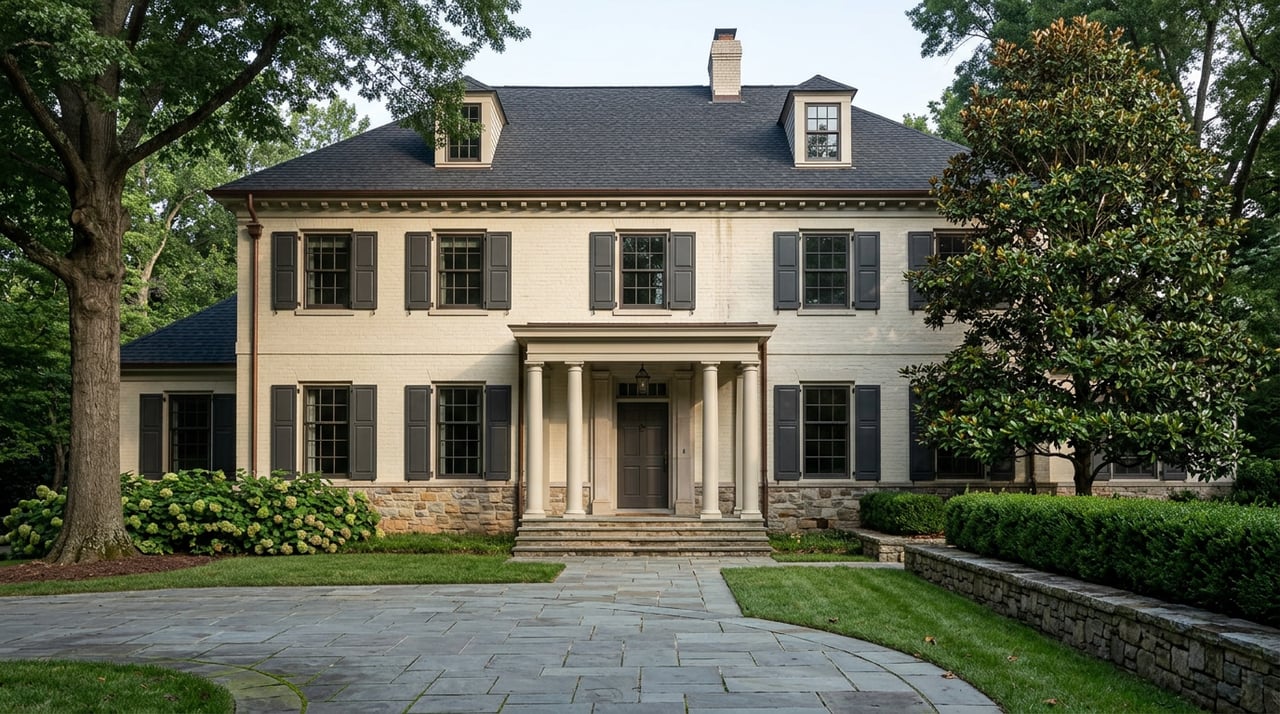
Once you separate the club from the ground, the price scatter starts to make sense. Country Club Hills was built out in waves starting in the 1950s, and homes have gone up as recently as 2011, which means the neighborhood is carrying three different products under one name:
Golf and lake frontage. Streets that wind along the course or the neighborhood's small lake with its island green carry the steepest premiums. These are the $2 million-plus listings, and the premium is paying for the view and the address, not for any guarantee of club access. A 2026 Parade of Homes entry from custom builder Raleigh Custom Homes is going up directly on the Carolina Country Club course, which is about as clear a signal as you get that this premium is real and still attracting new construction dollars.
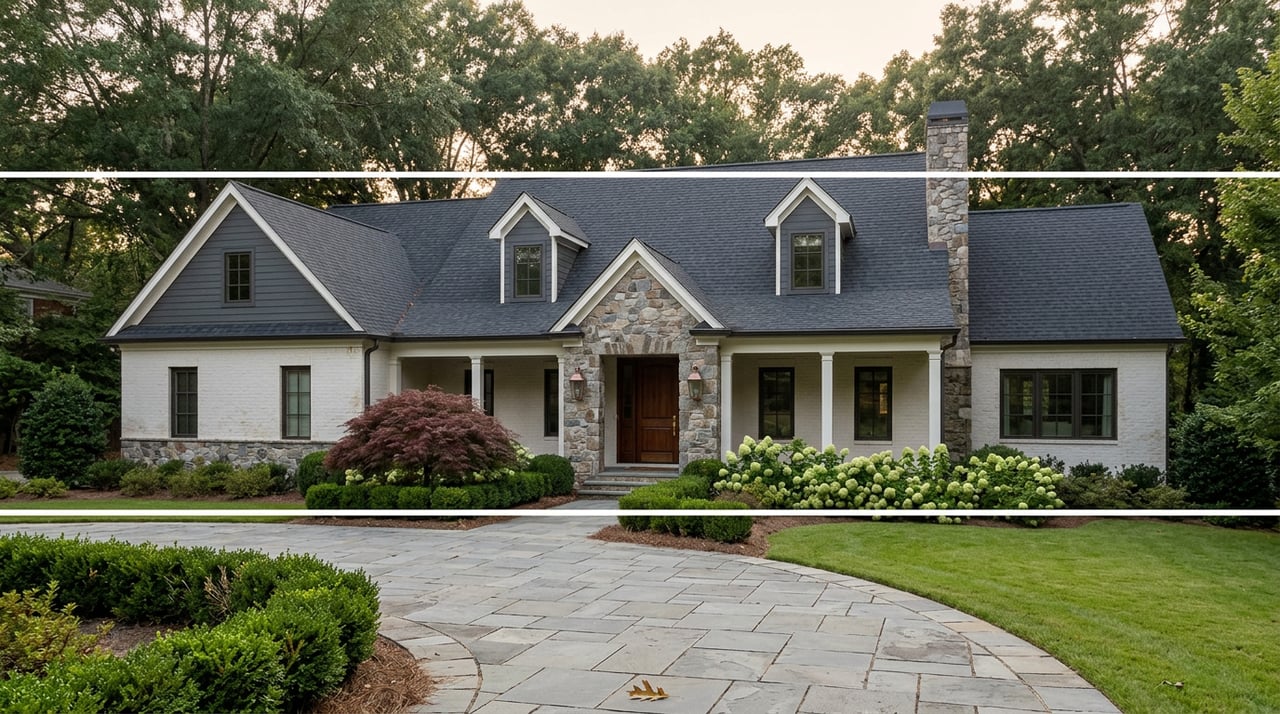
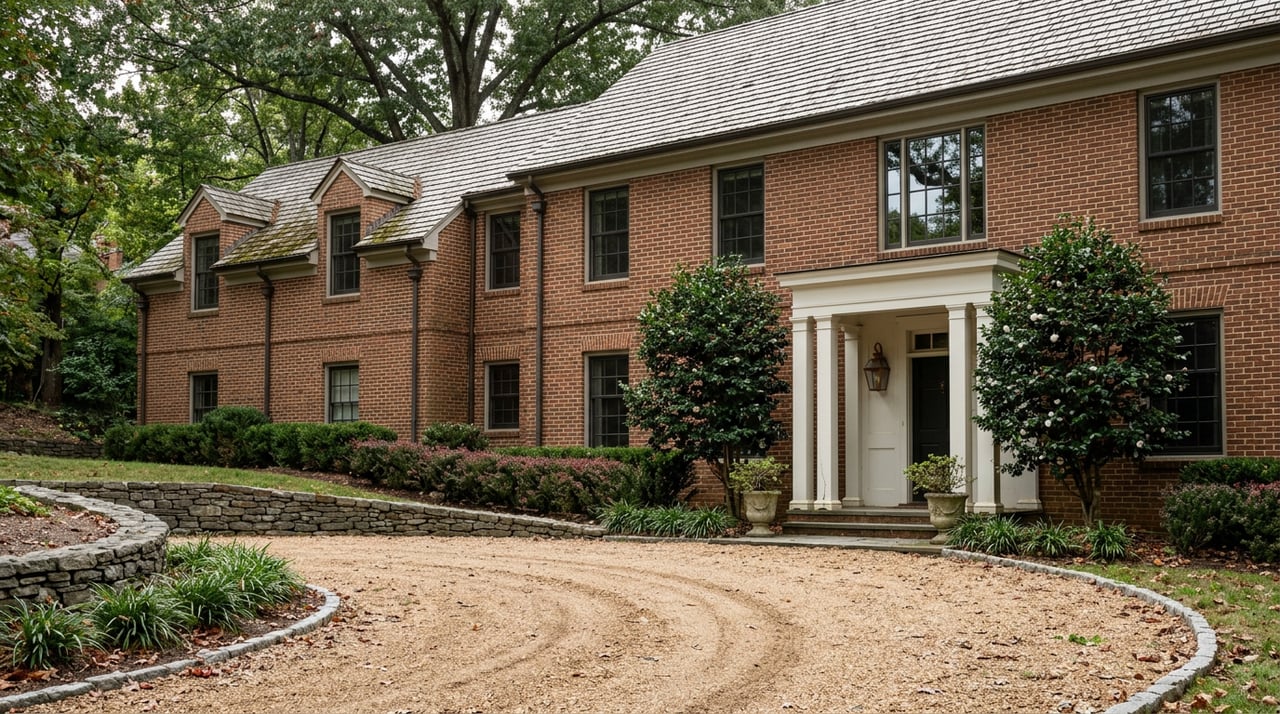
Interior teardown and rebuild lots. Away from the fairways and the lake, older brick ranches and small bungalows sit on generous lots, some over half an acre, that custom builders are actively targeting. One current lot, a .58-acre site overlooking the greenway with roughly 100 feet of frontage, is listed as ready to build. A separate half-acre lot elsewhere in the neighborhood comes with a Carter Skinner design plan already attached, or buyers can bring their own architect. And a four-level brick home on a 1.32-acre lot, designed by Jo Ewing and built by Hollingsworth & White, shows the same custom-build pattern reaching into the neighborhood's interior streets. None of this activity has anything to do with club proximity. It is driven by lot size and the fact that the underlying land, in an established, centrally located Raleigh neighborhood, is worth more than the 1950s house sitting on it.
Untouched original stock. The remaining homes, smaller and unrenovated, are what pulls the low end of the range down toward $400,000 and what makes the average days on market run longer, closer to three months, since these properties often need a buyer willing to either live with dated systems or plan a rebuild.
A single median price across all three of these categories tells you almost nothing useful. What tells you something is knowing which category the listing in front of you belongs to before you compare it to anything else on the market.
What to actually evaluate before you write an offer
For a buyer weighing a Country Club Hills property, the club question and the construction question deserve equal attention, and they require different due diligence.
On the club side, the only honest answer is to treat membership as its own multi-year project, separate from the home search, and to start the conversation with the club directly rather than assuming a real estate agent can broker access. Root Elementary, Oberlin Middle, formerly known as Daniels, and Broughton High School serve the neighborhood, which matters more for daily life than fairway proximity does for most families.
On the construction side, the spread between a 1950s ranch and a 2020s custom build sitting two doors apart means an inspection has to do more work here than in a neighborhood with more uniform housing stock. A brick ranch on a half-acre lot might be a smart entry point if the systems have been updated, or it might be land value wearing a house. Knowing which one you are looking at, before the offer, is the difference between paying for a home and paying for a teardown you did not budget for.
A short FAQ for buyers comparing Country Club Hills listings
Does buying a home in Country Club Hills get me into Carolina Country Club? No. The club is privately owned by its members, and access requires a nomination from a current member. Owning property in the neighborhood, even property that backs the course, does not create a path to membership on its own.
Is the club's initiation fee published anywhere? Not on the club's own site. Older third-party golf listings have cited figures from years past, but those are dated and should not be treated as current pricing. If membership is part of your decision to buy here, the club itself is the only reliable source.
Why do some Country Club Hills listings look so much cheaper than others? Lot location and construction age vary sharply within a few blocks. Interior streets away from the course and lake carry older, smaller homes at lower price points, while golf and lake frontage, along with new custom construction, sits at the top of the range.
If you are weighing a lot, a rebuild, or a finished home in Country Club Hills and want a second opinion on what you are actually paying for, from someone who reads a house the way a builder does before he reads it the way an agent does, I am glad to walk it with you. Let's Connect and we can look at the specific block, not just the neighborhood average. You can also browse current Country Club Hills listings and neighborhood detail directly, and if you want the club's own membership terms in writing, Carolina Country Club's membership page is the source to read before you assume anything about what your address will or won't get you.
Real estate guidance here comes from Jared Cozart, a Raleigh broker who spent 20 years as a licensed general contractor before he spent the next decade as an agent, and who treats a lot's construction history as seriously as its zip code.