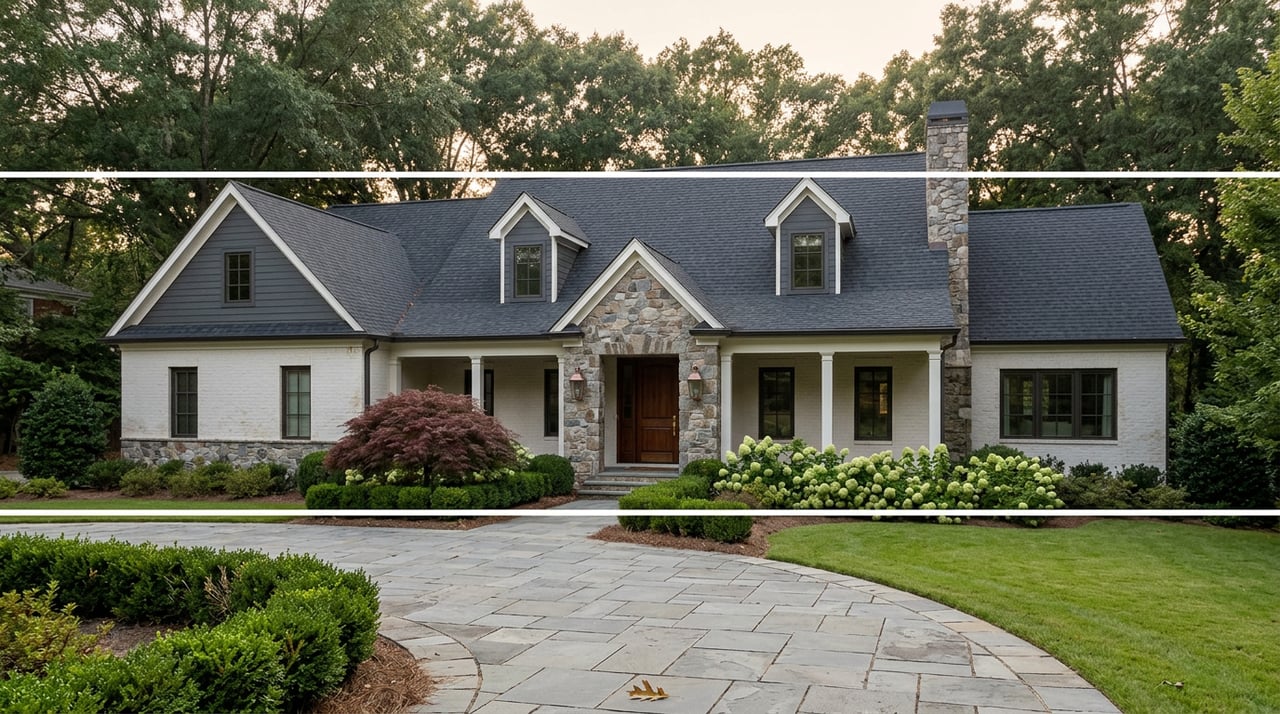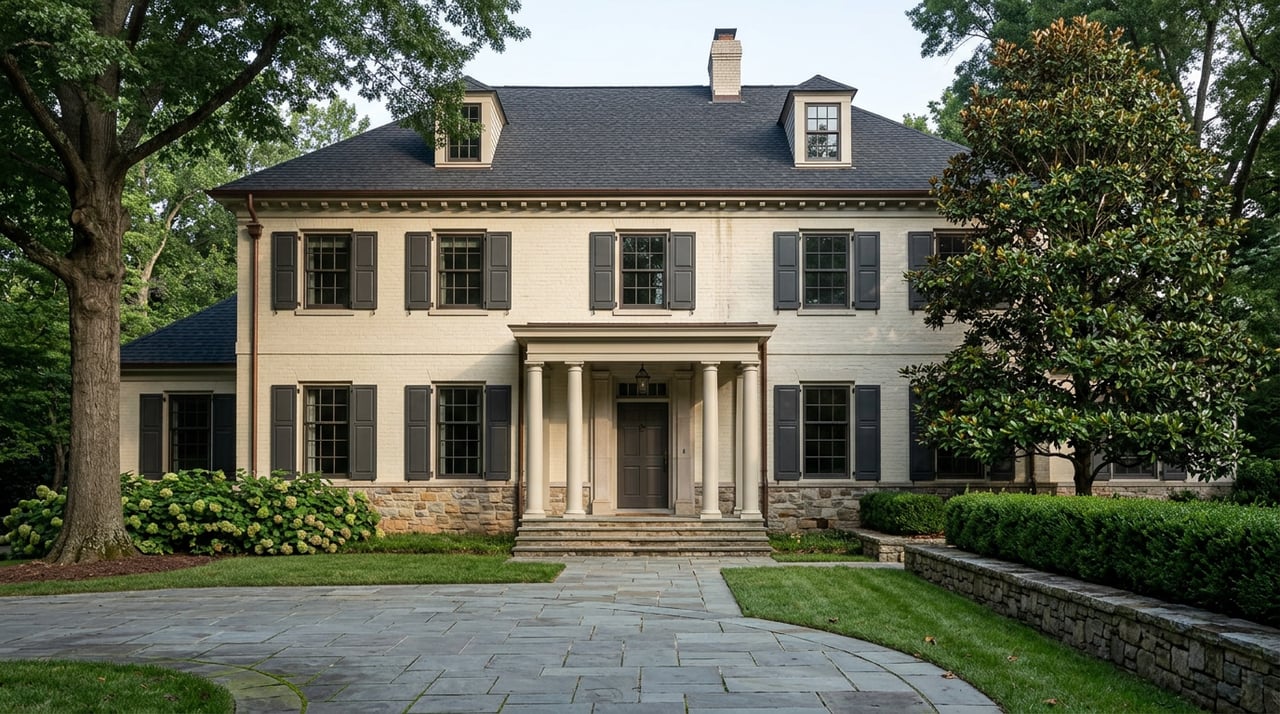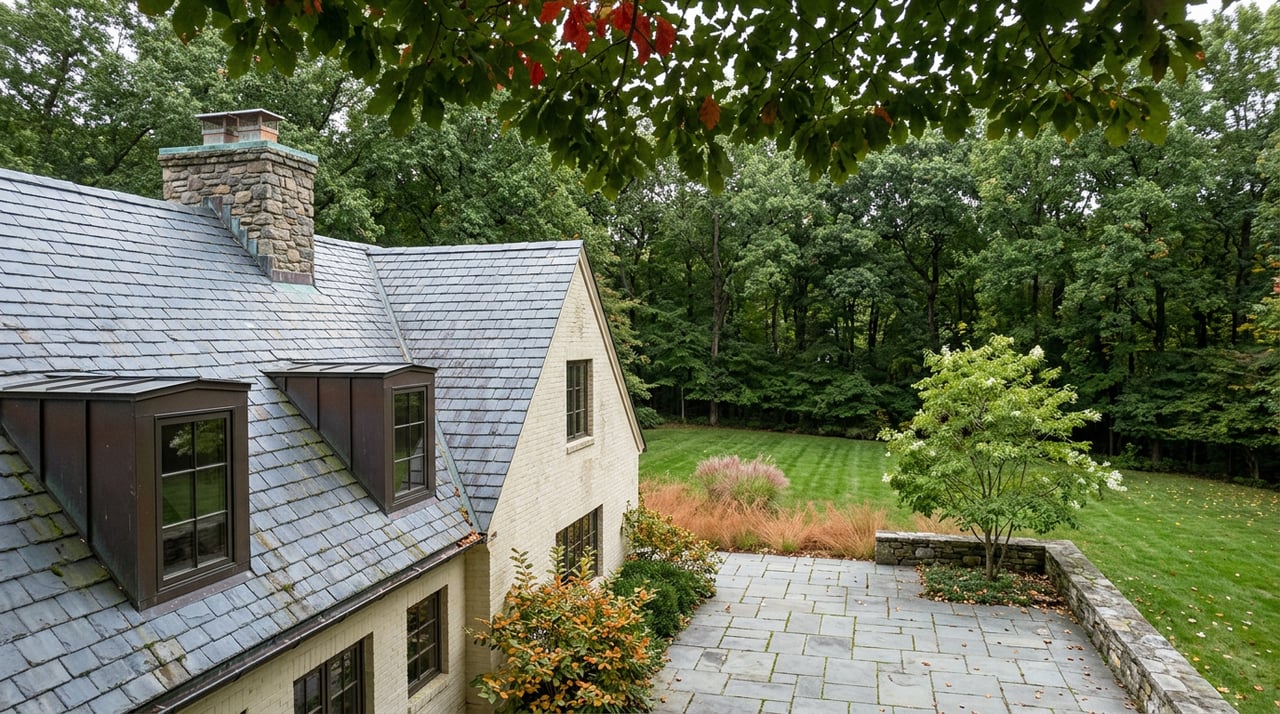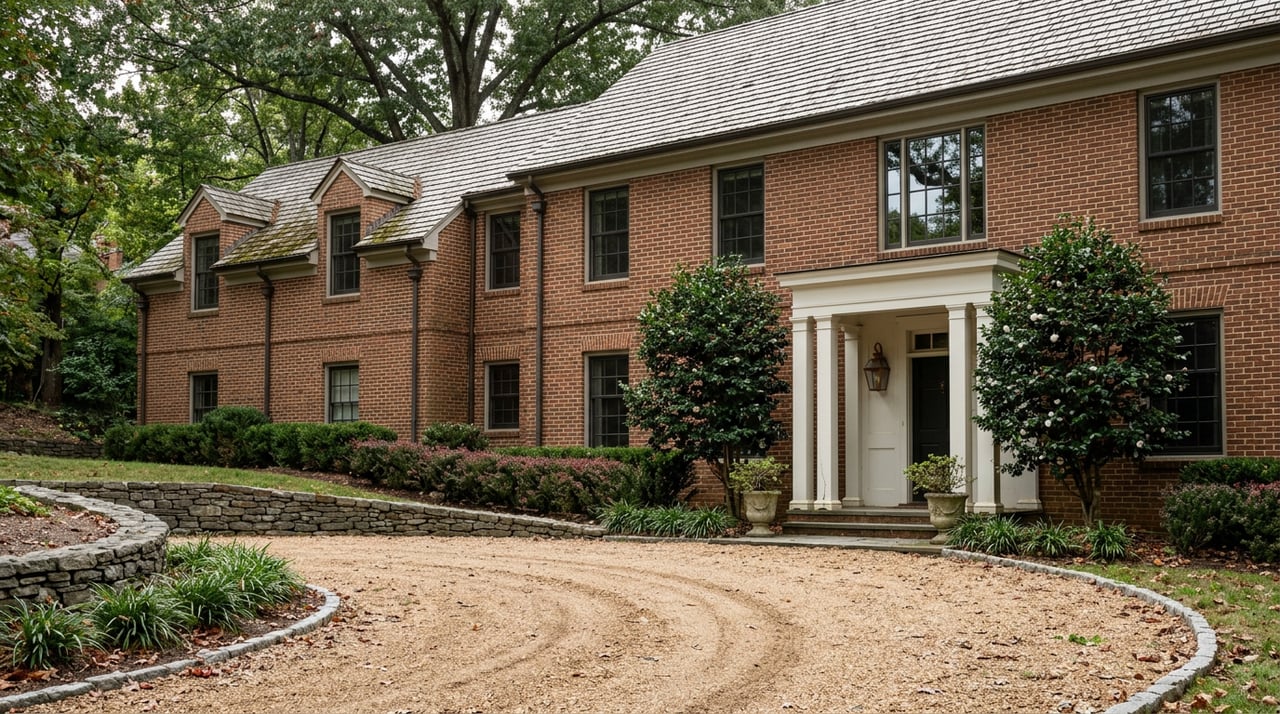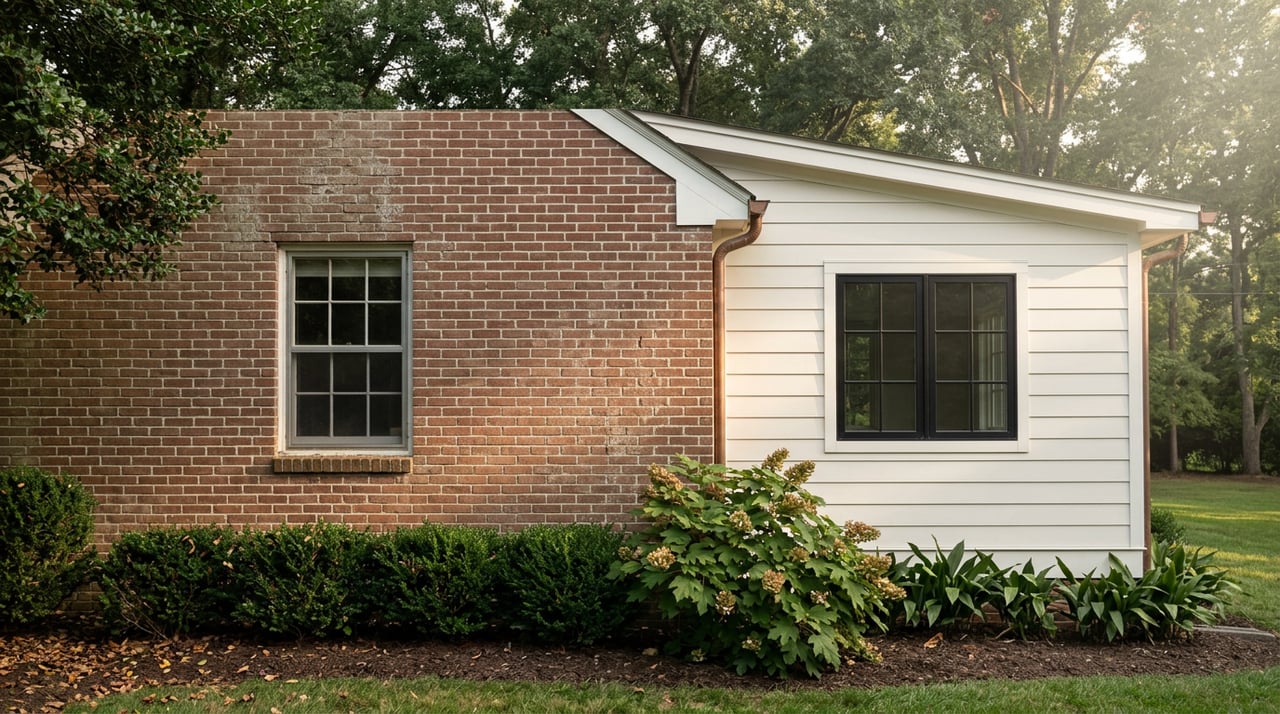
In February 2026, two homes closed in Drewry Hills within a week of each other. One sold for $1,695,000: four bedrooms, four baths, 4,329 square feet, roughly half an acre. The other sold for $4,750,000: six bedrooms, eight baths, 7,979 square feet, also roughly half an acre. Same neighborhood, same lot scale, a $3 million gap.
Five months earlier, a third home closed for $825,000. Three bedrooms, three baths, 2,159 square feet, a 12,632-square-foot lot, about 0.29 acres.
Pull those three sales and stack them next to each other and you get a spread that would make a data analyst nervous. Pull them apart and interpret each one on its own terms, and the spread stops looking like noise. It starts looking like the answer to the question every buyer touring Drewry Hills eventually has to ask: which market am I actually shopping in?
One Zip Code, Two Products
Drewry Hills is not confusing because it's inconsistent. It's confusing because it's running two different transactions under one name, and most listing descriptions don't tell you which one you're looking at.
The first market is the original-condition home. These are houses built when the neighborhood went in during the 1950s, part of a wave of early planned development on land that had belonged to the Drewry family. They haven't been touched structurally in decades. When one of these sells for a number that looks low for the address, it isn't a discount on the house. It's a fair price for the lot, minus the cost of everything a buyer will have to do to the house afterward.
The second market is the finished product. These are homes that have already absorbed the renovation or rebuild, whether that means a top-to-studs gut job or a full teardown and custom build. The seller, not the buyer, carried the risk of construction cost overruns, permitting delays, and design changes. The buyer is paying for square footage that's already done.
A $825,000 listing and a $4,750,000 listing in the same neighborhood aren't two ends of one market. They're two different products that happen to share a mailing address.
Reading the Comps Correctly
Look at the October 2025 sale again: $825,000 for 2,159 square feet on a lot approaching a third of an acre. At roughly $382 per square foot for the house itself, that price only makes sense if a meaningful share of the value is sitting in the dirt, not the structure. A buyer closing on that home in original condition should expect to spend real money before it reflects current finishes, layout, or systems.
Compare that to the $4,750,000 close in February 2026. At just under $600 per square foot across 7,979 finished square feet, six bedrooms, and eight baths, that price reflects a home where someone already paid the construction bill, absorbed the schedule risk, and delivered a finished product. The buyer there isn't pricing in renovation. They're pricing in convenience.
The $1,695,000 sale sits in between, and that's exactly the point. A 4,329-square-foot home with four bedrooms and four baths at roughly $391 per square foot reads like a home that's been meaningfully updated but not fully rebuilt. This is the trickiest tier to price correctly, because it's easy to mistake a well-staged renovation for a full rebuild, or a partial update for a home that still needs its systems replaced.
None of these three prices is wrong. Each is correct for what it's actually selling.
Who's Building the Rebuild Market
The rebuild side of Drewry Hills isn't a production-builder market. It's a custom one, and that tells you something about cost and timeline before you ever tour a lot.
One recent new-construction listing in the neighborhood was designed by Frazier Home Design and built by custom builder JW2. Another, a completed English Country estate on Marlowe Road, was built by Dougher Development Company to a design from architect Carter Skinner. A separate listing marketed a home exceeding 7,000 square feet as a fully custom estate, not a spec build off a catalog plan.
That pattern matters for anyone evaluating a teardown lot. Drewry Hills rebuilds run through architects and custom builders rather than volume production crews. That generally means longer design and permitting timelines, higher finish-level costs, and less room to control the budget by choosing a stock floor plan. If you're pricing a lot with redevelopment in mind, price the build against what a custom architect-led project actually costs in this market, not against a national average for new construction.
Why the Land Supports Both Markets at Once
Redevelopment economics only work when the location value is high enough to justify the rebuild cost. Drewry Hills clears that bar because of where it sits.
The neighborhood runs between Lassiter Mill Road and Anderson Drive, inside the Beltline, within easy reach of both North Hills and Five Points. It's the kind of location where a buyer can justify a seven-figure construction budget on top of the lot price, because the finished home will sit on land that isn't getting made anywhere else in Raleigh. That's also why the neighborhood supports roughly 300 homes ranging from untouched 1950s originals to multimillion-dollar custom estates without either extreme feeling out of place.
Take the same construction budget and put it on a lot in a location without that underlying land value, and the math doesn't clear. In Drewry Hills, it does, which is exactly why both markets can operate side by side.
How to Tell Which Market a Listing Belongs To
Before writing an offer, a buyer needs to answer one question: is this price built on land value or finished value?
Start with the obvious signals. A listing that emphasizes lot size, location, and "potential" is usually telling you it's pricing the dirt. A listing that leads with square footage, finish specifications, and a builder or architect name is telling you the construction risk has already been handled.
Then verify it. Ask when the roof, HVAC, plumbing, and electrical were last replaced, not just when the kitchen was updated. A renovated kitchen on 1970s mechanicals is still an original-condition home wearing new cabinets. Check whether permits were pulled for any recent work, since unpermitted renovations can create resale and insurance complications down the line. And walk the structure itself, not just the finishes: foundation condition, ceiling height, and structural layout tell you whether a home can support the addition or reconfiguration you're picturing, or whether you're better off treating it as a teardown from the start.
This is the part of the process where a construction background changes the outcome. Knowing what a gut renovation or full rebuild actually costs in 2026, not what a listing agent estimates it will cost, is the difference between a fair offer and an expensive miscalculation.
FAQ
How old is Drewry Hills, and how many homes are there? The neighborhood dates to the 1950s and was one of Raleigh's earliest planned communities, developed on land that had belonged to the Drewry family. It holds roughly 300 homes today, ranging from untouched originals to fully rebuilt estates.
Does Drewry Hills have a mandatory HOA? No. The neighborhood is served by a voluntary neighborhood association rather than a mandatory HOA, which gives owners more flexibility on exterior changes and renovations than some newer planned communities.
What should a buyer budget if they want an original-condition home to renovate? Recent sales suggest entry points near $800,000 for original-condition homes on solid lots, but that number is only the starting line. Budget separately, and realistically, for the renovation or rebuild itself before comparing a listing to a finished home priced well above $1.5 million.
If you're comparing a Drewry Hills listing against other Inside the Beltline neighborhoods and want a straight read on whether a specific price reflects the lot or the finished house, that's the conversation worth having before you write an offer. You can also start with a home valuation if you're weighing a sale on the other side of this same market.
Jared L Cozart has spent 20 years as a licensed general contractor before spending the last decade as a Raleigh broker, which means the walkthrough includes what's behind the walls, not just what's on the listing sheet. Let's Connect.